
I Never Stopped Being That Teacher
I have a friend who is a very successful superintendent. We talk fairly often because years ago we taught in the same department. The other week, he asked me something that caught me off guard.
“How come you never got into a rut?”
It was a curious question, so I pushed him a little further.
He said that when we first met, I had already been teaching for about fifteen years and he was brand new. One of the things he had learned since becoming a principal and then a superintendent was that, at about year seven, most teachers become who they are going to be for the rest of their careers. For some, that becomes a groove. For others, it becomes a rut.
Then he said, “But you were close to year fifteen, and every day you were coming in trying something new.”
That got me thinking.
I knew exactly what he meant.
He reminded me of the day I came to school dressed as George Washington, gathered the students’ desks around me, sat in a rolling chair, and had them pretend to row me across the Delaware River.
I remember that lesson vividly because I stole the idea from the 1984 movie Teachers. There was a slightly deranged social studies teacher in the film who dressed in costumes and turned history into theatre. Even at fourteen years old, I knew that was who I wanted to be.
Not literally, of course.
But I wanted to be the kind of teacher who made school feel alive.
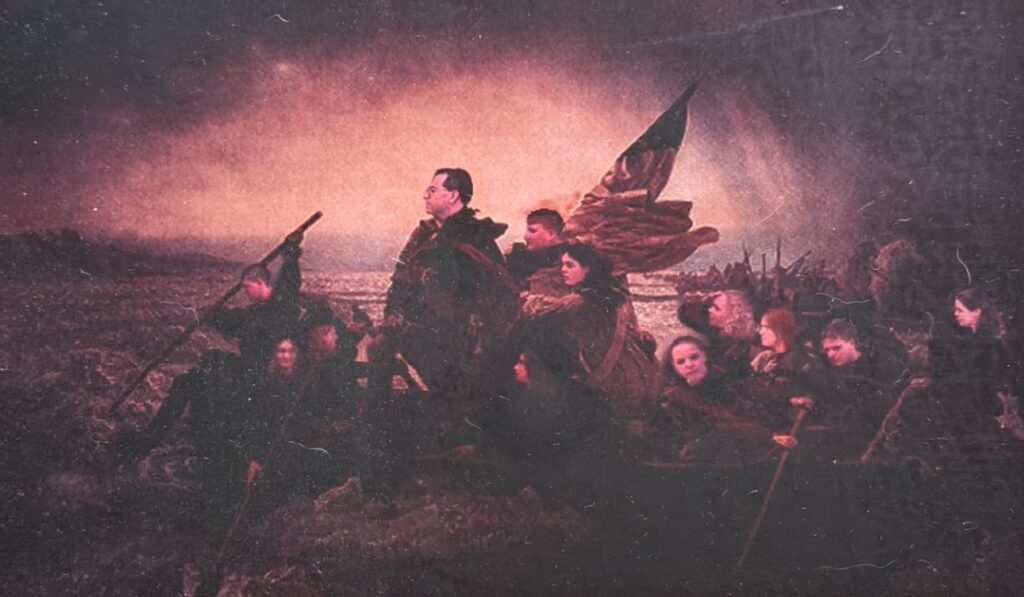
One student later recreated the lesson in his graphic arts class. I have always loved that the experience travelled beyond my classroom.
For thirty years, I had the chance to do that as both a teacher and a coach. I taught and coached in nine countries on four continents, and I was fortunate to experience thousands of those moments that made me excited to wake up and get to work. Moments where I taught like my hair was on fire. Moments that caught the attention of other teachers—sometimes admiringly and sometimes not.
“All that guy does is get the kids to shout.”
He wasn’t entirely wrong.
There was a lot of noise.
There were costumes. There was laughter. There were chants and music and games and celebrations. There were football practices that looked different from everyone else’s. There were classrooms that sometimes sounded more like a pep rally than a history lesson.
But looking back, the costumes and the shouting were never really the point.
The reason those moments worked was the environment underneath them.
It was a classroom where students felt seen. A classroom where they felt valued. A classroom where they believed they were in the right place. The same was true of my football teams.
And that culture did something for me too.
It gave me the same excitement and enthusiasm on my last day teaching in Winnipeg, Canada, that I had felt on my first day teaching in Rochester, New York.
That is the part I have only recently come to understand.
Micro-Inclusions did not only affect my students and players by making them more willing to buy into my vision. They affected my career because they created environments I wanted to return to every day.
I rarely had students or players who refused to buy in. And even on the odd occasion when someone did, they usually understood that our classroom or our team was a different kind of place.
Looking back over thirty years, I can count on one hand the number of former students or players I would not cross the street to say hello to.
That does not happen by accident.
And I am increasingly convinced that it does not happen because of a bulky three-ring binder, another summer initiative, or a program that asks exhausted educators to add one more thing to an already crowded day.
It happens through small, repeatable actions that make people feel seen, valued, and included.
I call those actions Micro-Inclusions.
They helped my students want to come back. They helped my players want to come back. And, maybe just as importantly, they helped me want to come back too.
Because when people feel like they are in the right place, they buy in.
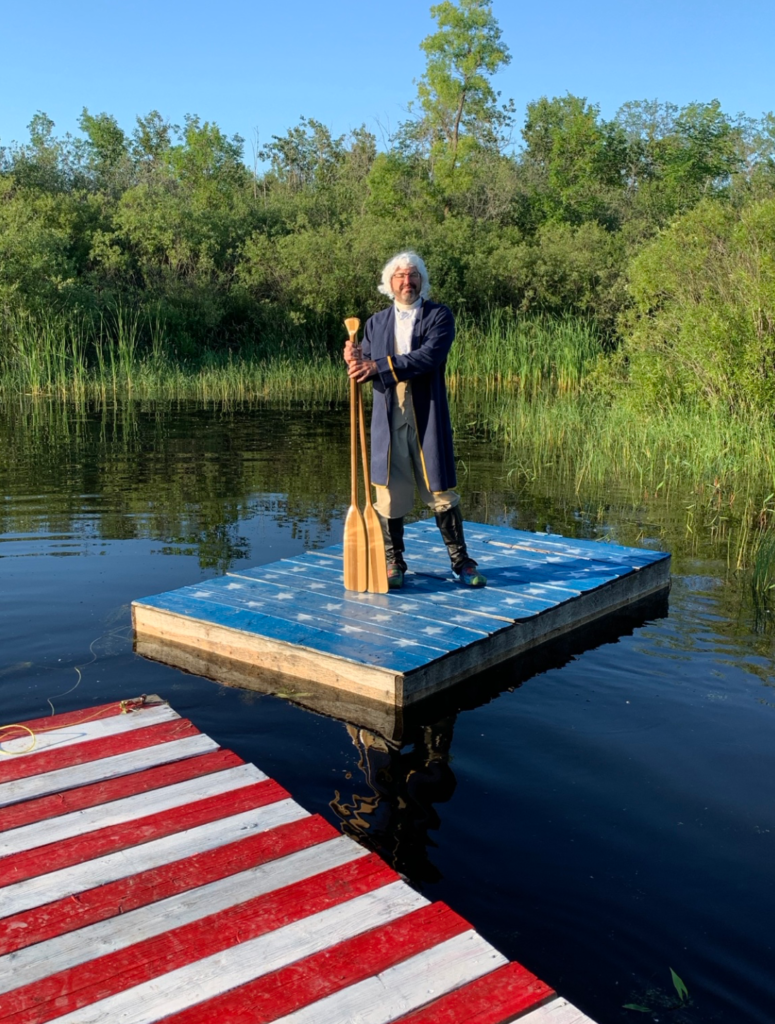
The costume survived the lesson. So did the enthusiasm.